 PCB & PCBA Manufacturer

What Is a High-Frequency PCB?
As signal frequency increases, standard FR-4 PCB materials begin to suffer from hig. ToHigh-Fr arlow-los desiMHz to GHz-range a.
These materials feature a low dissipation factor (Df) and astable dielectric constant (Dk), whichclean, h in RF, microwave, an
High-Frequency PCB Materials
Unlike standard FR-4, high-frequency PCB materials are selected based on their diele and d.
Lower Dk anbetter signal integrity and lower at hi
Rogers Laminates
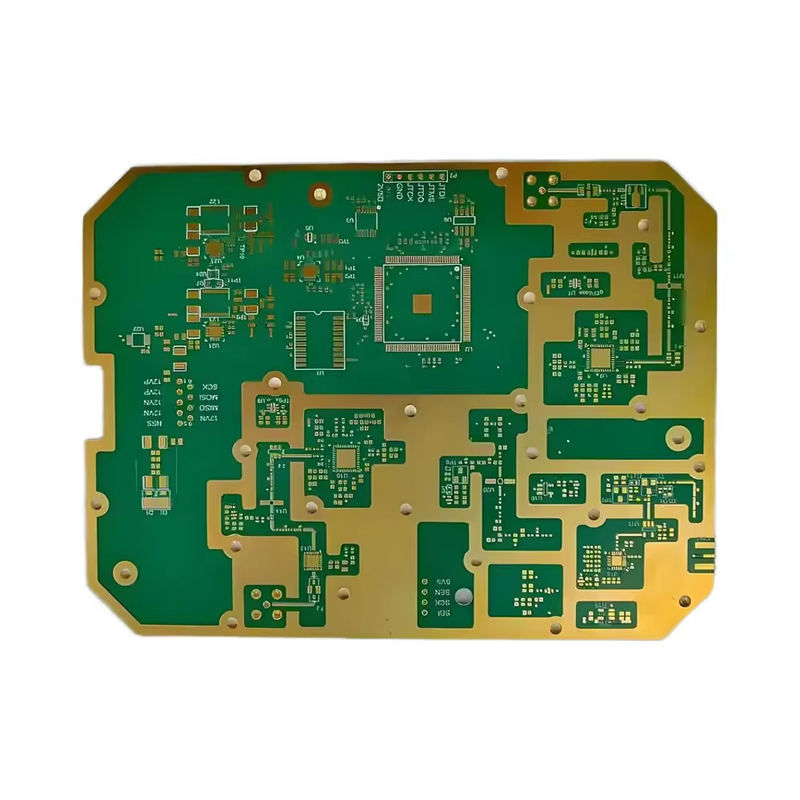
RO4350B (Dk=3.48, Df=0.0037)
RO4350B is a glass-re widely used in RF and microwave designs. Its low Z-axis CTE ensures excellent reliability in multilayer PCBs with plated through-holes (PTH), making it ideal for power amplifiers, RF modules, and high-speed digital circuits.
PTFE (Teflon) Materials
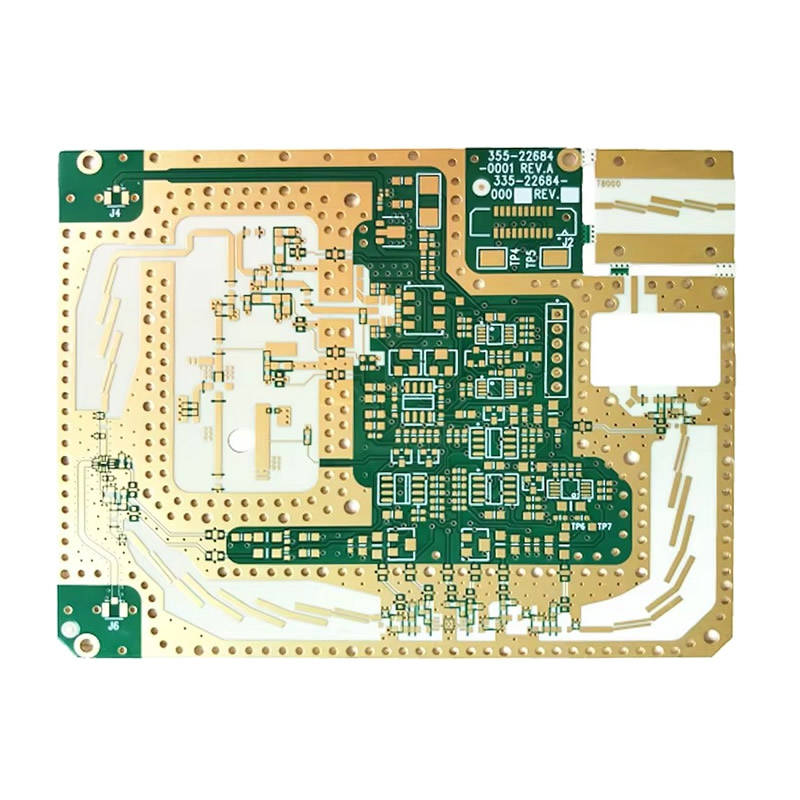
| Material | Dk | Df |
|---|---|---|
| ZYF255DA | 2.55 | 0.0018 |
| ZYF265D | 2.65 | 0.0019 |
| ZYF300CA-C | 2.94 | 0.0016 |
| ZYF300CA-P | 3.00 | 0.0018 |
PTFE-based PCBs offer exceptionally low dielectric loss, high thermal resistance, and outstanding electrical stability. They are ideal for high-frequency, high-reliability, and high-power RF applications, while also providing good resistance to oxidation and UV exposure.
Benefits of High-Frequency PCBs
Low Dielectric Loss
Low Df materials significantly reduce signal attenuation, EMI, and crosstalk, ensuring strong and stable signals at high frequencies.
Stable Performance at High Speeds
At GHz frequencies, signals propagate through the dielectric while copper traces act as waveguides. Low-loss substrates ensure minimal distortion and predictable signal behavior.
Excellent Signal Integrity
High-frequency laminates minimize impedance variation, phase delay, and parasitic effects, which is critical for RF, microwave, and high-speed digital circuits.
High-Frequency PCB Design Considerations
Controlled Impedance
Trace width, spacing, and dielectric properties are used to achieve precise impedance values such as 50Ω, 75Ω, and 100Ω for RF transmission lines.Thermal Expansion (CTE)
Low and stable CTE prevents via cracking and layer separation in multilayer high-frequency PCBs.Copper Foil Type and Plating
Smooth copper foil reduces conductor loss at high frequencies and improves signal quality.
Common Applications of High-Frequency PCBs
RF and Mic
Used in RF front-end modules, antennas, and power amplifiers where pre are essen
5G Infrastructure
Applied in base stations, mmWave modules, and beam-forming systems that require ultra-low-loss signal transmission.
Satellite Communication
Critical for high-frequency uplink and downlink systems that demand high reliability and minimal signal distortion.
Why Choose Tengxinjie for High-Frequency PCBs?
High-Performance Materials
We offer advanced laminates such as Rogers RO4350B and PTFE Teflon, with Dk from 2.55 to 3.48 and Df as low as 0.0016, supporting frequencies from 1 GHz to 40 GHz.
Reliable Quality Control
Every high-frequency PCB undergoes strict inspection and electrical testing to ensure stable impedance, low loss, and consistent RF performance.
Cost-Effective Manufacturing
High-Frequency PCBs start from $47, delivering professional RF-grade performance at competitive pricing.
Fast Prototyping
We support 4–5 day prototype turnaround, allowing rapid design validation and faster product development.
As signal frequency increases, standard FR-4 PCB materials begin to suffer from hig. ToHigh-Fr arlow-los desiMHz to GHz-range a.
These materials feature a low dissipation factor (Df) and astable dielectric constant (Dk), whichclean, h in RF, microwave, an