 PCB & PCBA Manufacturer

What is PCB Conformal Coating?
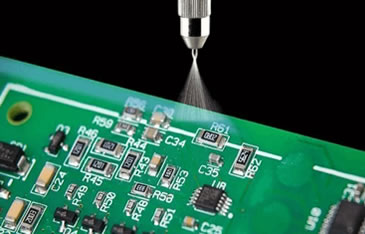
PCB Conformal Coating
Why PCB Conformal Coating Is Essential for Reliability
The performance of PCB can deteriorate due to various factors, including the operating environment. Thus, to make your PCB perform well and make it long-lasting, you need to protect it. Conformal Coating acts like a protective layer that protects your circuit board from harsh environmental conditions in the long term. It can withstand environmental conditions like moisture, extreme temperatures, and chemical and salt sprays. These conditions could result in the electric failure of your board. Thus, the coatings ensure the reliability of printed circuit boards, reducing prematurely failed hardware costs. Furthermore, the coating is used to:
- Increase the dielectric between the conductors.
- Provide closer conductor spacing.
- Protects board from corrosion and chemical attacks
- Sometimes, it protects from mechanical stress, too
Types of Conformal Coatings
There are various types of conformal coating available on the market. Each one has its characteristics. Let’s look into some of the widely used conformal coating in the PCB industry:
Acrylic Resin (AR) Coating
Acrylic conformal coatings are commonly used due to their excellent dielectric strength. They provide a fair level of protection against moisture and abrasion and are particularly noted for their ease of removal. This feature makes them ideal for applications requiring rework or repair.
Pros
- High dielectric strength
- easy to remove for rework or repair
- Cost-effective
- provides essential protection against a range of contaminants.
Cons
- Not resistant to solvents
- less durable compared to other types
- not suitable for high-stress environments.
Silicone Resin (SR) Coatings
Silicone coatingsare known for their flexibility and excellent performance across a wide temperature range. They offer good resistance to chemicals, moisture, and salt spray, making them suitable for high-humidity environments.
Pros
- Great for extreme temperatures
- Flexible
- good chemical and moisture resistance
- ideal for high-humidity conditions.
Cons
- Not abrasion-resistant
- difficult to remove
- can be challenging to apply evenly.
Urethane Resin (UR) Conformal Coating
Urethane coatingsare known for their moisture and chemical resistance. They are also abrasion-resistant. Thus, it makes them a robust choice for demanding applications.
Pros
- Excellent moisture and chemical resistance
- high abrasion resistance
- suitable for harsh environments like aerospace applications.
Cons
- Very difficult to remove
- limited reworkability
- can be sensitive to UV light
Epoxy Conformal Coatings
Epoxy coatingsare known for their hardness and excellent humidity resistance. These two-part compounds create a very durable and non-permeable layer.
Pros
- Strong humidity resistance
- high abrasion
- chemical resistance
- very durable once cured
Cons
- Difficult to remove
- not flexible
- hard apply
Parylene Conformal Coating
Parylene coatings are unique in their application method (vapor phase deposition). It provides exceptional dielectric strength. They offer unparalleled resistance to moisture, solvents, and extreme temperatures.
Pros
- superior moisture and solvent resistance
- excellent dielectric strength
- thin yet effective coverage
Cons
- difficult to remove for rework
- requires specialized equipment for application
- expensive
Thin Film/Nano Coatings
It is applied in a very thin layer. It provides a basic level of hydrophobicity. It protects against quick water exposure.
Pros
- suitable for light moisture exposure
- can be applied thinly and uniformly
Cons
- Limited protection compared to other types
- not suitable for harsh environments
- provides minimal surface protection
Step-by-Step: How to Apply PCB Conformal Coating
Conformal Coating can be applied in the following ways:
- Prepare the Surface: First, clean the electronic board to remove any dust or other particles. This ensures the coating adheres well.
- Apply the Coating: There are various methods to apply conformal coating. It includes dipping, brushing, and spraying. Spraying is used for large batches, bruising for small areas, and dipping for equal and uniform coverage.
- Curing the Coating: After applying the coating, it should be set. This can be done naturally or with heat or UV light, depending on the type of Coating used.
- Inspection: Finally, inspect the board to ensure the Coating is applied uniformly. Ensure there are no missed spots or bubbles.
PCB Conformal Coating Process
Conformal Coating is a critical method for shielding circuit boards and electronic components from harsh weather conditions. Here is a brief guide to the many ways to apply conformal coating.
Manual Spraying
This method involves using an aerosol can or handheld spray gun. It’s typically used for low-volume production when more sophisticated equipment isn’t available.
- Pros: Good for small batches and specific areas.
- Cons: It is time-consuming and requires manual masking of areas not to be coated. Quality may vary due to operator dependency.
Selective Coating
In this automated process, programmable robotic spray nozzles apply the coating to precise areas on the circuit board. It is ideal forhigh-volumeproduction and eliminates the need for masking. It requires advanced equipment and programming.
Dipping
The PCB is immersed in the conformal coating material. The immersion and withdrawal speed, as well as the viscosity of the coating, determine the film formation. It helps to apply the coating uniformly. It is suitable for high-volumeprocessing. At the same time, the process required extensive masking.
Brushing
It is a simple technique where the brush is used to apply the coating in specific areas, mainly used in repair and rework applications. It is low-cost and straightforward for small areas or repairs. At the same time, it is labour-intensive and highly variable, not suitable for large-scale applications.
Dilution
High-viscosity coatings may be diluted with solvents like acetone or toluene for more straightforward application. It allows for consistent coating thickness and ease of application. It requires careful handling and precise mixing to maintain coating properties.
Cure Methods
Silicone conformal coatings typically cure with exposure to moisture, reacting with ambient moisture to form the polymer coating. This can be accelerated with heat. The process is effective, with simultaneous drying and curing. It requires careful control of environmental conditions to prevent issues like blistering.
Key PCB Conformal Coating Standards
Conformal coatings are also applied following specific industry standardscovering PCB acceptance requirements, acceptability of electronic assemblies, and qualification and performance specifications for rigid PCBs. Tengxinjie conformal coatings comply with the following standards.
- MIL-I-46058C: This military standard has been around for a long time and is still widely referenced. It sets rigorous testing criteria for conformal coatings used in military applications. Although it’s been inactive for new designs since 1998, many in the industry still adhere to it.
- IPC-CC-830B: This specification is related to MIL-I-46058C but is continually updated. It’s an active specification widely used in the electronics industry.
- UL94V0 and UL746E: Underwriters Laboratories (UL) standards assess conformal coatings for flammability (UL94) and electrical safety (UL746E). They ensure that coatings used on electronics are safe and meet high safety standards.
- IEC 61086: This international standard is similar to MIL-I-46058C but is based on supplier self-certification. It provides a global standard for conformal coatings.
Final Thoughts: Why Tengxinjie Is Your Trusted PCB Conformal Coating Partner
If you want to protect your PCB from tough conditions, like moisture and extreme temperatures, think about using a conformal coating. It’s a layer that shields against contaminants, improves electrical properties, and enhances reliability.
Our company, Tengxinjie is an expert in applying coatings like Acrylic, Silicone, Urethane, Epoxy, Parylene, and Thin Film. We adhere to industry standards like MIL-I-46058C and IPC-CC-830B for top-quality work.
We apply coatings using methods like spraying, dipping, and brushing, customized to your needs. Contact usto provide skilled conformal coating, ensuring your electronic components last longer and perform reliably.
FAQs about Conformal Coating
Q1: What is PCB Conformal Coating Spray?
A1: PCB Conformal Coating Spray is an aerosol-based protective chemical coating for printed circuit boards (PCBs). It protects electronic circuitry from extreme environmental conditions such as moisture, dust, and temperature variations. This spray forms a thin, protective layer that ‘conforms’ to the design of the PCB. Thus, it protects its electronic components and increases overall reliability.
Q2: How Do You Remove Conformal Coating?
The type of conformal coating used determines how to remove it. Here are the general methods: Solvent Removal: Many conformal coatings, mainly acrylics, can be removed using certain solvents. However, ensuring that the solvent does not damage the PCB components is critical. Peeling: Certain coatings, such as silicones, can be peeled off. Thermal or Burn-Through: Using a soldering iron to burn through the Coating for tiny rework. Microblasting removes coatings that use abrasive and compressed air and is ideal for resistant coatings such as epoxy or perylene. Grinding/scraping: Used to remove hard coatings and as the last option due to the risk of harming the PCB.
Q3: What Are The Most Common Conformal Coating Defects?
Common defects in conformal Coating include: Bubbles or blisters: Caused by trapped or solvent air, which forms gaps in the Coating. Cracking or breakdown occurs when the Coating does not adhere well to the PCB or due to thermal cycling. Orange Peel: A rough surface that resembles an orange peel, mainly caused by incorrect spraying techniques or viscosity concerns. Pinholes: Small holes in the Coating caused by air entrapment or surface impurities. Uneven Coating: Differences in coating thickness are usually caused by faulty application procedures.
Q4: How Long Does It Take For Conformal Coating To Dry?
The drying for conformal Coating depends on the kind of Coating and environmental conditions: Acrylics: Tack-free time varies from a few minutes to an hour, while complete curing might take 24 to 72 hours. Silicones: Longer tack-free duration, maybe several hours; final curing might take anywhere from 12 hours to a few days. Urethanes dry quickly, frequently within minutes, but final curing might take 24 to 48 hours. Environmental elements such as temperature and humidity considerably impact these timeframes.