 PCB & PCBA Manufacturer
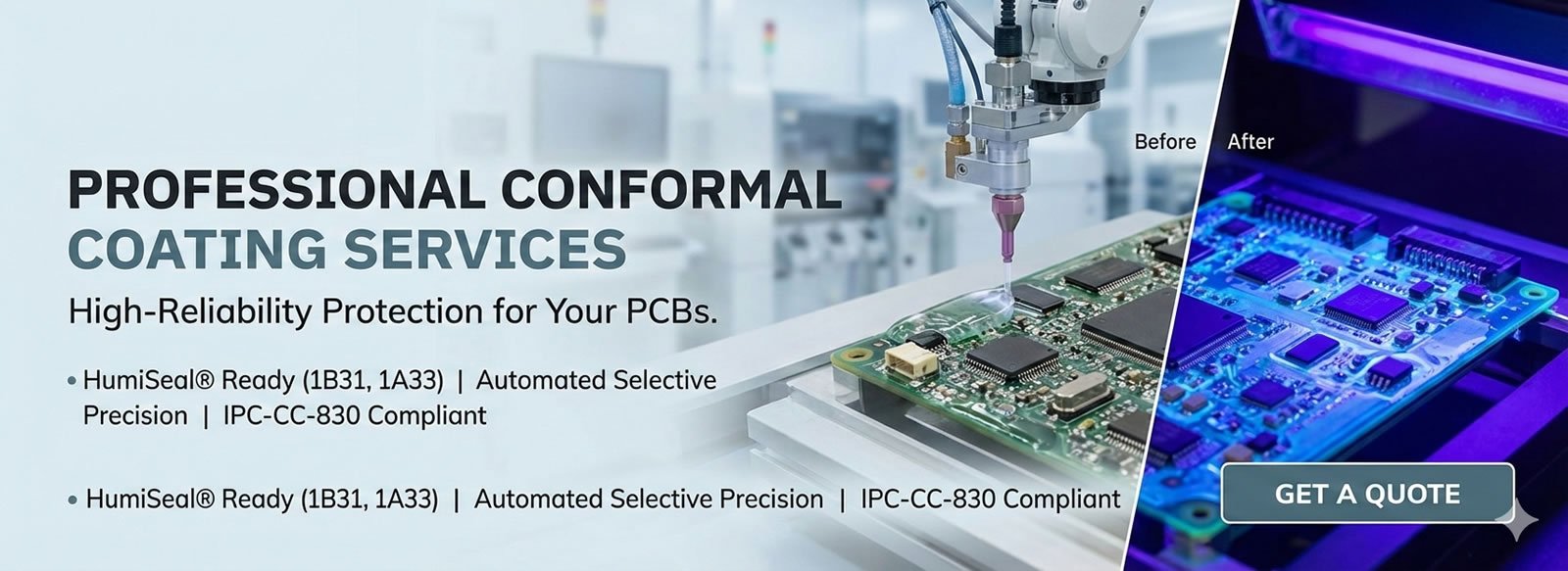
Acrylic Conformal Coating | Easy-to-Apply, Re-workable PCBA Protection
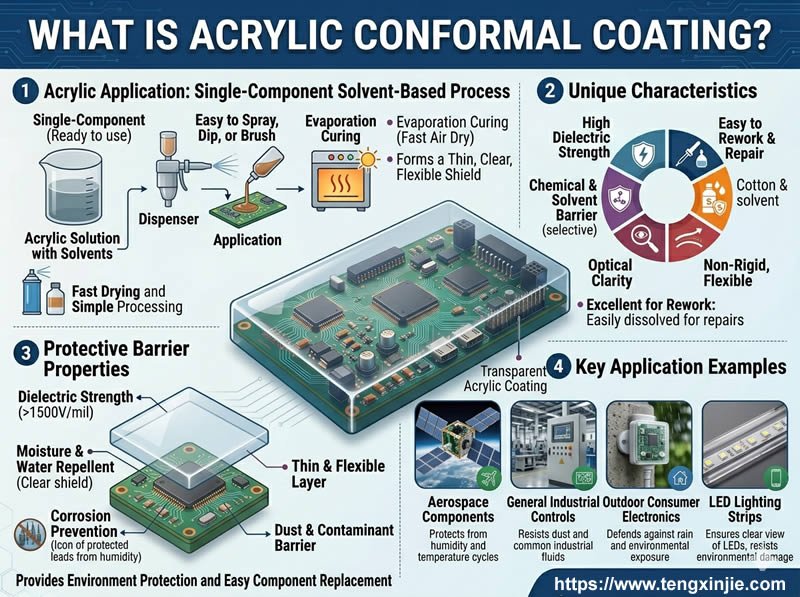
Acrylic conformal coating (AR coating) is a versatile, fast-drying protective film widely used for printed circuit board assemblies requiring moisture resistance, dielectric insulation, and easy reworkability. Unlike hard epoxies or high-temperature silicones, acrylic coatings are thermoplastic — meaning they can be softened with solvents for straightforward repair and component replacement.
What Is Acrylic Conformal Coating?
Acrylic conformal coating (also known as conformal coating acrylic) is a clear, flexible polymer film applied to printed circuit boards to protect against moisture, dust, corrosion, and mild chemical exposure. It is typically supplied as a solvent-based system that dries at room temperature or with mild heat, leaving a transparent, resilient layer.
At Tengxinjie, we provide professional acrylic coating PCB services using automated selective spray, manual spray, or dip-coating methods. Our acrylic PCBA protection process is fully compliant with IPC-CC-830, RoHS, and UL standards, making it a trusted choice for cost-effective, high-volume electronics manufacturing.
Acrylic Conformal Coating
Key Benefits of Acrylic Conformal Coating
🔄 Easily Reworkable & Repairable
The thermoplastic nature of acrylic conformal coating means it can be softened and removed using common solvents (such as isopropyl alcohol or proprietary strippers) without damaging the board or components. This makes field repairs, component replacement, and rework significantly faster and more cost-effective compared to epoxies or parylene.
💧 Excellent Moisture & Humidity Resistance
Conformal coating acrylic provides an effective barrier against moisture ingress, preventing corrosion, dendritic growth, and electrical leakage in humid or condensing environments. It is particularly effective at protecting boards in consumer electronics, lighting, and HVAC applications.
☀️ UV & Oxidation Stability
Acrylic coatings offer excellent resistance to UV degradation and yellowing over time, making them ideal for applications exposed to sunlight or indoor lighting (e.g., LED drivers, outdoor displays, signage).
💨 Fast Drying & Simple Application
Acrylic coating PCB dries quickly at room temperature (typically 10-30 minutes tack-free) or can be force-dried in minutes with mild heat. This enables fast throughput and minimal production delays.
How Does Acrylic Compare to Other Conformal Coatings?
Acrylic vs. Epoxy
Acrylic conformal coating is much easier to rework and recoat than epoxy. Epoxy is harder and more chemical-resistant but is thermoset and cannot be easily removed. Choose acrylic for assemblies requiring field service, repair, or component replacement. Choose epoxy for permanent, harsh-chemical environments.
Acrylic vs. Silicone
Silicone offers superior thermal stability (-40°C to +200°C) and flexibility but is more expensive and can be difficult to remove completely. Conformal coating acrylic is more cost-effective, easier to rework, and provides adequate protection for most consumer and industrial applications with normal temperature ranges.
Acrylic vs. Urethane
Urethane provides better chemical and abrasion resistance but is more difficult to rework and may yellow under UV. Acrylic PCBA protection is preferred for UV-exposed applications (LEDs, outdoor) and designs requiring future rework.
Acrylic vs. Parylene
Parylene is ultra-thin, pinhole-free, and biocompatible — ideal for medical and aerospace. Acrylic coating PCB is significantly less expensive, easier to apply, and reworkable, but thicker and not recommended for implantable medical devices or high-reliability aerospace.
Acrylic Conformal Coating Technical Specifications
| Parameter | Acrylic Coating Capability |
|---|---|
| Coating Type | Solvent-based acrylic (AR) — various viscosities available |
| Application Methods | Automated selective spray, manual aerosol spray, dip coating, brush |
| Typical Thickness | 25 – 75 µm (1 – 3 mils) — multiple coats possible |
| Curing Method | Air dry at room temperature (10-30 min tack-free, 24hr full cure) or forced warm air (5-15 min at 60°C) |
| Temperature Range | -40°C to +125°C (intermittent) |
| Dielectric Strength | 1,500 – 2,500 V/mil (depending on thickness) |
| Water Absorption | < 0.3% (24-hour immersion) |
| UV Stability | Excellent — minimal yellowing after extended exposure |
| Compliance | IPC-CC-830, RoHS, UL 746E (specific grades) |
| Color | Clear, fluorescent (for UV inspection), or custom tint |
Typical Applications for Acrylic Conformal Coating
📱 Consumer Electronics
Smartphones, tablets, wearables, smart home devices, and appliances requiring moisture protection and reworkability for cost-effective manufacturing.
💡 LED Lighting Modules & Drivers
Acrylic conformal coating provides UV-stable, moisture-resistant protection for LED boards, drivers, and lighting controls exposed to indoor or outdoor environments.
🏠 HVAC & Appliance Controls
Control boards for air conditioners, refrigerators, washing machines, and thermostats benefit from acrylic’s humidity resistance and repairability.
📡 Telecommunications
Router, switch, and base station boards requiring reliable protection against dust, humidity, and mild chemical exposure.
⚡ Power Supplies & Chargers
AC-DC converters, battery chargers, and power adapters where cost-effective moisture and corrosion resistance is needed.
🖨️ Office Equipment & Peripherals
Printer, scanner, and copier control boards exposed to paper dust and moderate humidity.
Why Choose Tengxinjie for Acrylic Conformal Coating?
✅ High-Volume & Prototype Capability
From single-board prototypes to millions of units, our automated selective spray lines and batch dip systems deliver consistent acrylic coating PCB quality at any scale.
🔬 Fluorescent Additives for Inspection
We offer coatings with fluorescent tracers for easy UV inspection, ensuring every board receives complete, uniform coverage — no missed areas or pinholes.
🧪 Masking & Selective Coating Expertise
We provide precision masking for connectors, test points, switches, and other keep-out zones, with fixturing designed for your specific board layout.
📋 Full Quality Documentation
Our processes are IPC-CC-830 compliant. We provide thickness measurements, UV inspection records, and CoC for every batch.
Ready to Protect Your PCBA with Acrylic Conformal Coating?
Upload your files and coating specifications. Our engineering team will review your design and provide a detailed quote within 12-24 hours.
✔ NDA Available ✔ ISO 9001:2015 ✔ IPC-CC-830 Compliant ✔ Fast Turnaround
Frequently Asked Questions (FAQs)
WeChat
Scan the QR Code with WeChat